
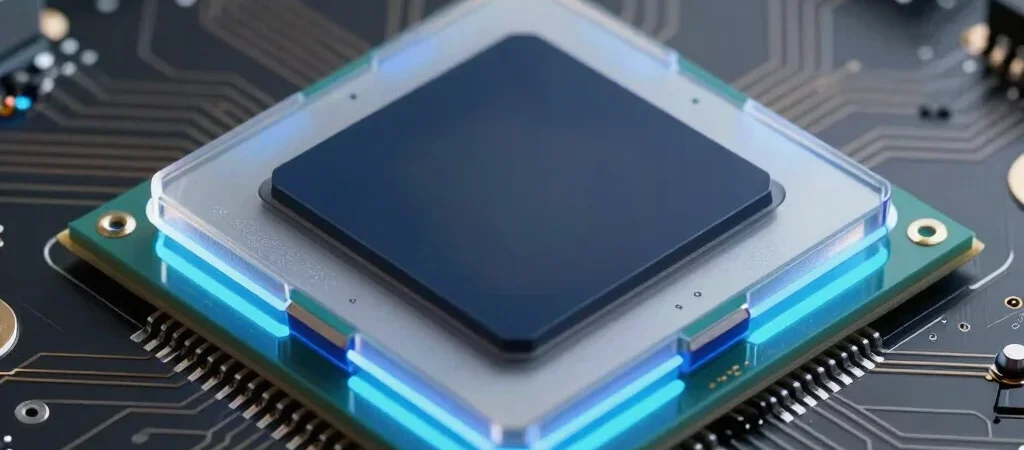
Enterprise computing environments are reaching a pivotal inflection point where traditional GPU clusters struggle under the latency and power demands of real-time AI inference. As foundational models grow in scale, the bottleneck has shifted decisively from raw training compute to efficient operational execution. Engineering teams now require dedicated hardware strategies that balance latency tolerances, memory bandwidth, and thermal dissipation.
Memory Bandwidth Over Raw Compute Cycles
High-bandwidth memory architectures are proving far more critical than raw floating-point calculations when running high-throughput transformer models. Specialized neural processing units integrated directly alongside static memory reduce data movement overhead by orders of magnitude. This structural shift allows enterprise networks to process incoming streams with predictable sub-fifty-millisecond response times.
Real-World Deployment in High-Density Environments
Organizations implementing hyper-converged edge nodes are seeing drastic reductions in overall energy consumption while maintaining continuous model availability. By deploying domain-specific accelerators, software architects eliminate the costly network hops previously required to route queries to centralized data centers. The resulting signal-to-noise ratio in infrastructure design marks a permanent move toward localized intelligence.
Navigating Commercial Maturity and Integration
Transitioning to specialized inference pipelines requires careful evaluation of software compiler ecosystems alongside raw hardware performance metrics. Legacy enterprise stacks must adapt to modular orchestration layers capable of dynamically routing tasks across heterogeneous silicon. Technology leaders who establish clear hardware evaluation benchmarks today will secure a decisive operational advantage over the coming decade.