
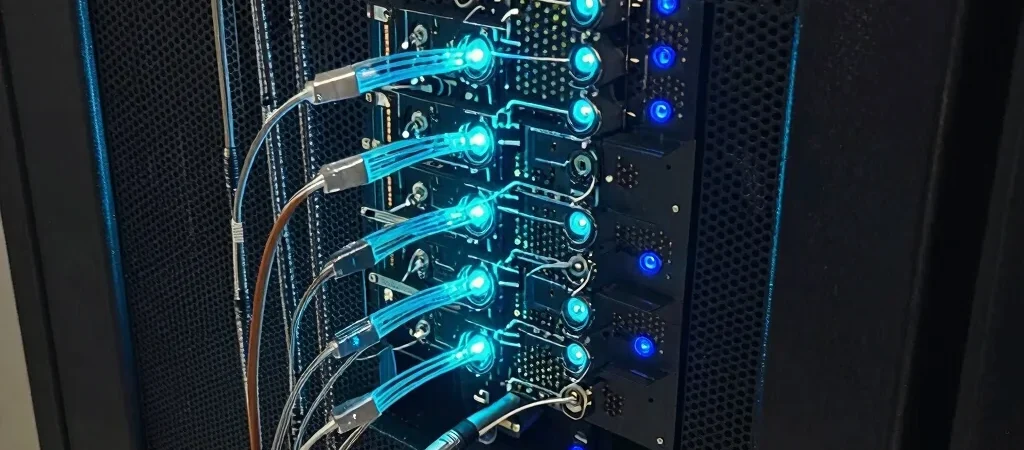
Long regarded as a laboratory curiosity, quantum key distribution has crossed the threshold into live fiber-optic networks across major financial hubs. The fundamental premise relies on photon polarization states to generate encryption keys that reveal any interception attempt instantly. As quantum computing capabilities advance, securing sovereign data pipelines against prospective decryption threats has become an immediate priority.
Enterprise adoption is accelerating due to turnkey optical transceivers capable of multiplexing quantum signals onto existing telecommunication links without dedicated dark fiber. Initial field measurements confirm stable key generation rates across distances exceeding one hundred kilometers under typical urban network loads.
Physical Security Built on Quantum Mechanics
Unlike mathematical encryption algorithms that risk eventual algorithmic compromise, physics-based cryptography leverages the observer effect to guarantee transmission integrity. Any attempt by an unauthorized third party to measure transmitted photons alters their state, immediately alerting network administrators and invalidating compromised keys. This continuous verification model establishes an unbreachable foundation for cross-border settlement systems.
Commercial Readiness Across Critical Infrastructure
Telecom operators and utility managers are actively integrating hybrid security models that combine classical post-quantum algorithms with physical optical channels. These implementations provide defense-in-depth protection for smart grid controls, interbank communications, and defense telemetry. Early deployment data indicates operational maintenance costs are rapidly aligning with legacy enterprise security hardware.